When Luxury Forgets Its Soul
A Story About Reverence, Distortion, and the Future of Conscious Hospitality
Every era has its watershed moment — a point when a brand reveals not just what it does, but who it truly is beneath the marketing gloss. For many of us, the development of the Ritz-Carlton Maasai Mara has become that moment. It is as if the veil dropped for a second and we all collectively felt the same thing: Ah. This is what happens when luxury loses its soul.
The story unfolding in Kenya isn’t just about a hotel. It marks a deeper fracture — the widening gap between the old paradigm of luxury and the new one humanity is quietly seeking. And while corporate press statements continue their polished dance, the truth is as clear as the African sky: What the Ritz is doing in the Maasai Mara is not luxury. It is extraction wearing a designer suit.
What’s Actually Happening in the Maasai Mara — and Why People Are Concerned
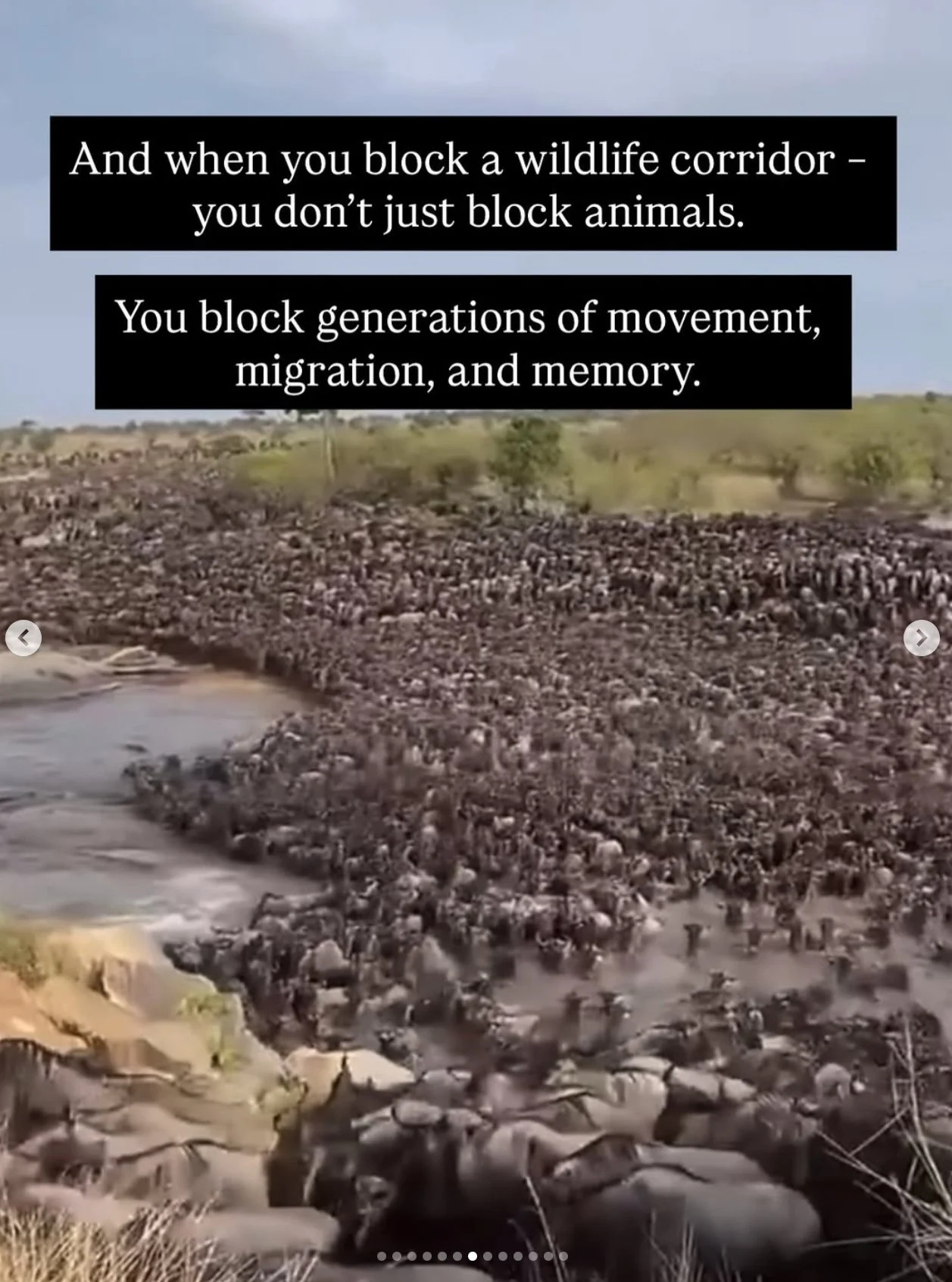
For those hearing about this for the first time, here is the simplest way to understand the situation: The Maasai Mara is one of the most sacred ecological corridors on Earth — a living artery that carries over a million wildebeest, zebras, antelopes, predators, birds, and pollinators through one of the last great migrations on the planet. It is not a “destination.” It is an ancient pathway of life.
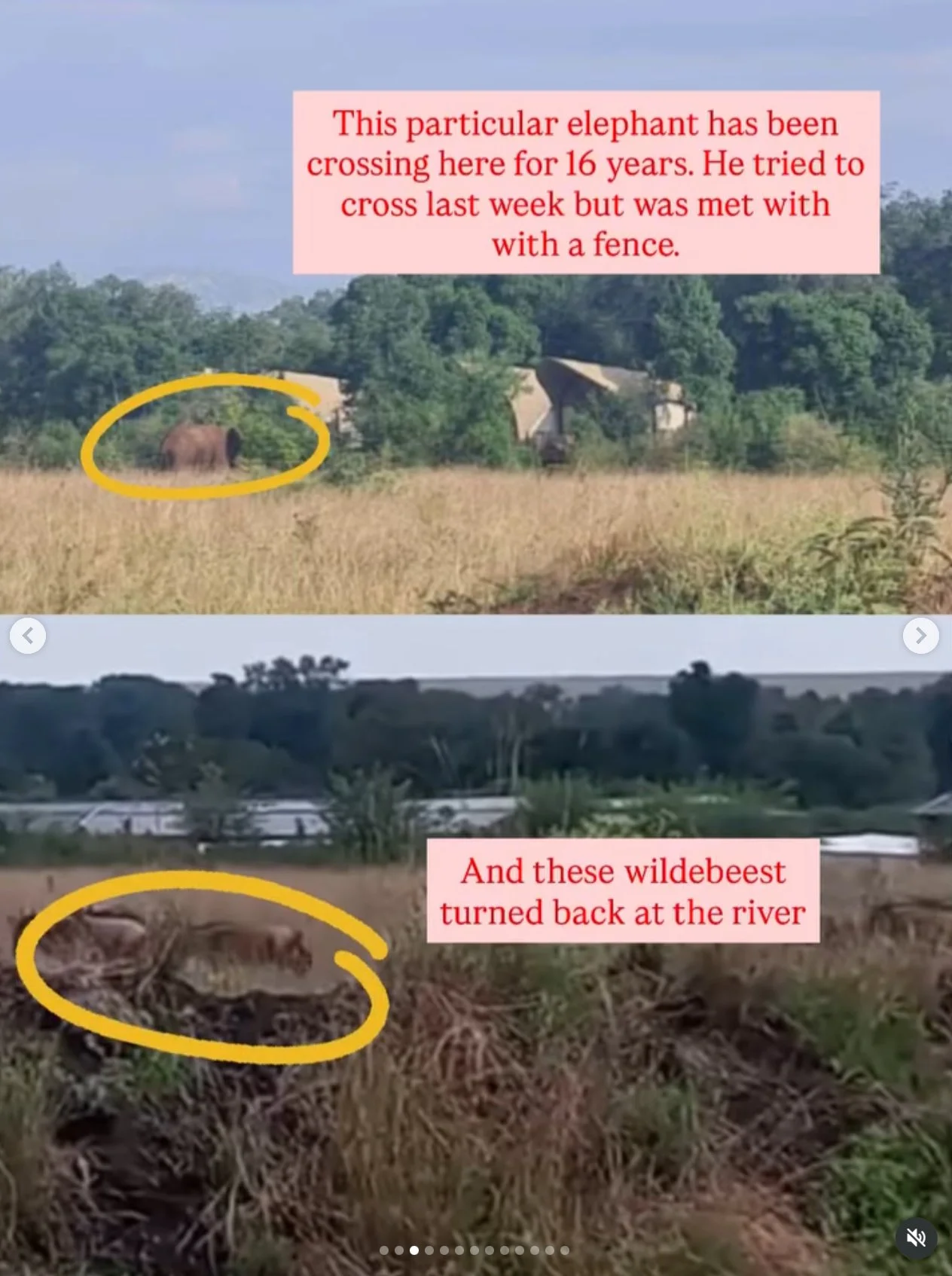
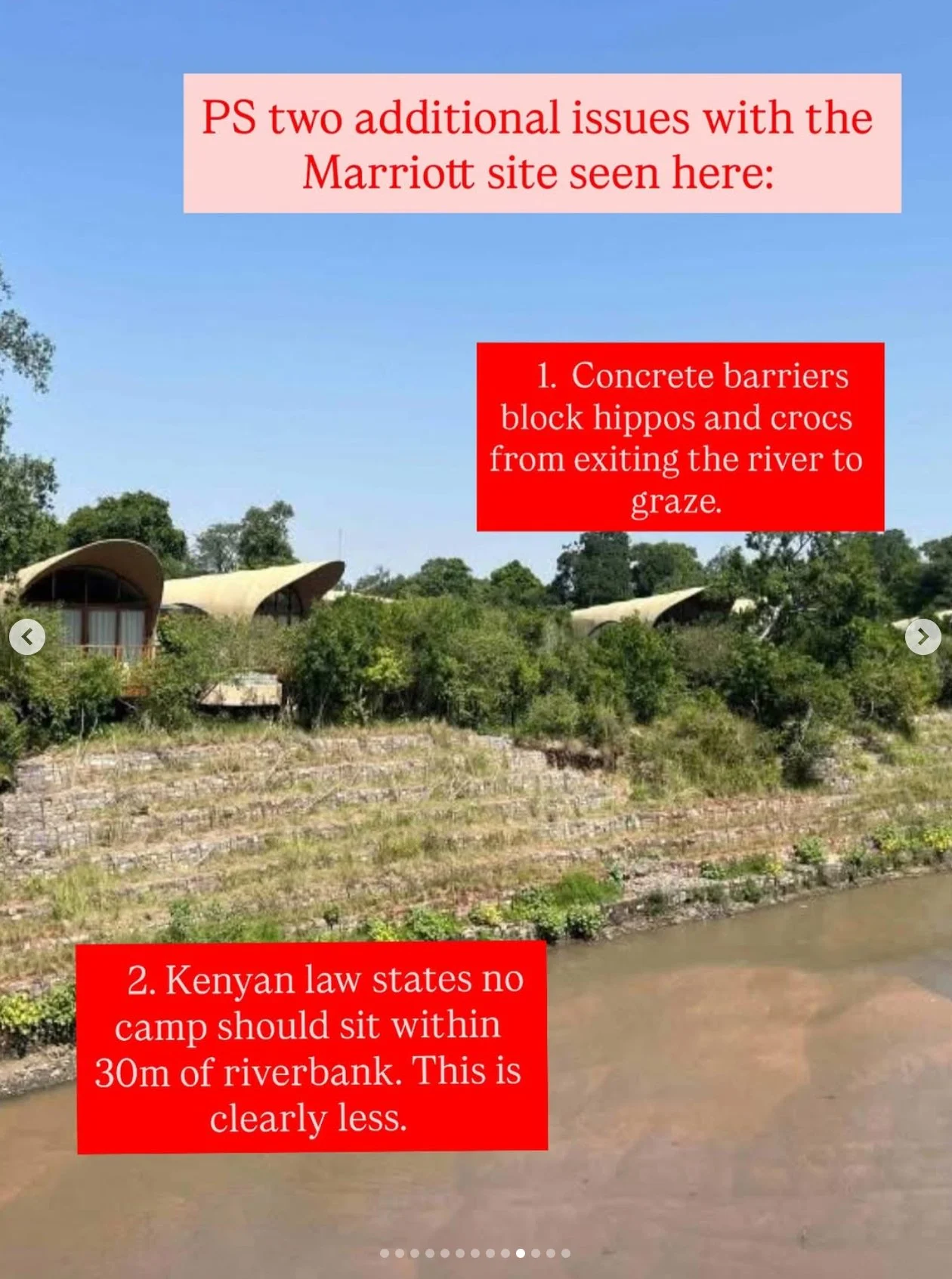
In recent months, the Ritz-Carlton — part of the Marriott hotel chain — began developing a large luxury resort directly within this fragile ecosystem. Images shared by conservationists show extensive excavation, heavy machinery, and cleared land along the migration route — a place where silence, darkness, and open space are essential for the survival of countless species.
Local guides, conservationists, naturalists, and elders have been sounding the alarm for weeks. Their concerns are simple and valid:
– Large-scale construction disrupts migration paths
– Noise, lights, and vehicle traffic push wildlife away
– Soil erosion and river disturbance affect breeding grounds
– Corporate resorts consume far more water and power than the land can sustain
– Local communities rarely benefit proportionately
– And perhaps most painfully: the cultural and ecological spirit of the Maasai Mara is being treated as a backdrop rather than a living being
This is not a small safari lodge built in collaboration with stewards of the land. This is a multinational corporation imposing the same formula it uses everywhere else — in one of the most delicate life corridors on Earth. That is the heart of the issue. This is why people are speaking up. This is why the land itself feels misrepresented. And this is why so many of us feel moved to say: Luxury cannot mean harm. Not anymore.
The Human Story: Voices Being Ignored
For generations, the Maasai people have lived in relationship with this land — not as owners, but as kin. Their herding routes, cultural rituals, and stories are woven through the soil, sky, rivers, and migration itself. Yet, as with so many corporate “developments,” the people whose identity is tied to the land were given little say in what is now being built upon it.
Local guides, elders, and conservationists have repeatedly expressed concern about the disruption of grazing land, the intrusion of heavy machinery into wildlife corridors, and the quiet cultural erasure that happens when a brand renames the land to suit its marketing. But their voices are being overshadowed by glossy renderings, polished press releases, and the seductive language of “luxury expansion.”
A land that has always been in conversation with its people is being spoken over by a global chain that sees opportunity where others see ancestry.
The Ecological Story: What Happens When a Corridor Is Disturbed
A migration route is not a “view.” It is a living artery. Each year, more than a million animals move through the Serengeti–Mara ecosystem in one of the last great migrations on Earth — a planetary miracle shaped by instinct, rainfall, soil health, predators, prey, pollinators, and ancient patterns.
When a corporation builds directly inside this pathway, it does not simply alter a landscape; it interferes with a rhythm that has shaped life for thousands of years. Construction noise pushes herds away. Lights disorient nocturnal species. Increased vehicle traffic fractures routes. Soil disruption affects breeding grounds. And once the land’s integrity fractures, the entire cycle weakens.
This is why ecologists and conservationists have been sounding the alarm. You cannot “offset” spiritual or ecological harm with a sustainability paragraph at the bottom of a website. Luxury built at the expense of a migration is not luxury. It is a wound.
The Symbolic Story: Why This Moment Matters Culturally
Beyond the environmental damage, something subtler — and more revealing — is unfolding. The Ritz-Carlton Maasai Mara has become a symbol of an older cultural pattern: a version of luxury that prioritizes aesthetic dominance over ecological harmony, extraction over reciprocity, and optics over truth.
In 2025, this is not just outdated — it is incoherent with where humanity is going. People are waking up. They are beginning to sense the difference between true luxury and marketed indulgence; between beauty that honours the land and beauty that cannibalizes it.
This story is not simply about a hotel — it is about a paradigm shift already in motion. A shift toward integrity, reverence, and ecological coherence becoming the new markers of refinement. And in that context, the Ritz-Carlton’s development reveals something it likely never intended: Luxury without soul is no longer luxury at all.
And once you see the full picture of what is unfolding on this land, the behaviour of the Ritz-Carlton takes on a familiar shape — one that echoes an old paradigm many hoped we had already laid to rest. For all their PR statements and polished renderings, the energetic signature behind this project is unmistakable: the old story of taking, renaming, extracting, and dressing it up as exclusivity. A pattern we have seen before — just with different costumes.
When a “Luxury Brand” Behaves Like a Colonial Relic
It’s hard not to notice the irony. A global hotel chain known for “timeless elegance” behaves, in 2025, like it’s still 1890 — building with entitlement, dismissing ecological reality, and treating sacred land as business opportunity rather than living intelligence.
At this point, the Ritz-Carlton may as well start selling ivory-tusk keychains, “exclusive” trophy hunts, or curated colonial nostalgia gift sets — because the energetic signature behind their actions is indistinguishable from that frequency.
Yes, it’s a playful exaggeration — but only barely. When a brand shows blatant disregard for sacred life, the line between “luxury” and domination becomes almost impossible to see.
When Design Becomes a Mask for Distortion
Design is one of the great seducers. It can soften, soothe, and enchant — but it can also distract. The architecture at the Ritz-Carlton Maasai Mara will surely be stunning. The finishes exquisite. The photographs breathtaking.
But here is what the old paradigm forgets: if the spirit behind a design is distorted, the beauty becomes distorted too. No amount of marble or mood lighting can cleanse a project built through ecological disregard, displacement of life, narcissistic brand posturing, or the quiet violence of extraction.
A space cannot be truly beautiful if the land was not honoured in its making. This is not mysticism — it is resonance. Guests may not consciously understand why the experience feels “off,” but the body knows. A design made without reverence carries a sharpness beneath the polish. It is the difference between a home that welcomes you and a showroom that performs for you. The Ritz project in the Maasai Mara performs. It does not listen.
The Human Spirit Is Evolving — and Luxury Must Evolve With It
The most interesting part of this moment is not the misstep itself but what it reveals about us. People are waking up. We are becoming sensitive again — finally. We want beauty that nourishes, not overwhelms. We want luxury that feels meaningful, not performative. We want hospitality that honours the land, not conquers it. We want design with a heartbeat, not a marketing deck.
And the Marriott/Ritz-Carlton group has shown us where they stand: not with the land, not with the people, and not with the future. They have offered us a blueprint that might have worked twenty years ago — but feels grotesque today. The world is no longer hypnotized by status. It is longing for coherence.
Aligned Luxury: The Path Forward
The future of luxury is not louder, shinier, or more exclusive. It is quieter, truer, relational, and attuned. It looks like: regenerative architecture; deep respect for indigenous wisdom; partnerships with local communities; minimizing footprint rather than maximizing spectacle; spaces that calm the nervous system; beauty that begins with honour, not ego.
True luxury isn’t a view — it’s a frequency. It’s how you feel in your body. It’s the integrity of a space. It’s the relationship with the land beneath your feet. It is the reverence woven into the design.
A Gentle Call to the Conscious Traveler
This blog isn’t a takedown — it is an invitation. Where you choose to spend your hospitality dollars matters. You are not just booking a room; you are investing in a worldview. You are signalling what you value. You are shaping the future of travel.
If a brand shows disregard for Gaia, for community, for sacred land, for coherence — we have no obligation to fund that distortion. There are extraordinary eco-lodges, regenerative retreats, and community-led sanctuaries that honour the land far more deeply than a corporate behemoth ever could.
The Ritz-Carlton “Masai Mara” has shown us what luxury looks like when it forgets its soul. Now we get to choose what true luxury becomes.
Luxury Re-Defined
Luxury is not what you see — it is what you sense. It is not in the grandeur — it is in the grounding. It is not in the excess — it is in the essence. Luxury is reverence. Luxury is alignment. Luxury is honouring Gaia and the human spirit in every decision, every design, every detail. Anything else — no matter the price tag — is just an expensive expression of distortion.
Note: For a deeper look behind the scenes, conservationists, guides, and local experts have been documenting the ongoing impact of this development. One of the clearest voices to follow is @jungle_doctor on Instagram, who is sharing daily updates with extraordinary clarity and courage.
Below are images showing the harm the Ritz-Carlton is causing in the Maasai Mara/Serengeti — or as the Ritz-Carlton prefers to spell it, the “Masai” Mara. A small but telling signal of how little care they have for honouring the land, its heritage, or the people who belong to it.
We are entering an era where refinement is defined not by excess but by alignment — by how softly we walk, how carefully we build, and how deeply we honour the places that hold us.
May we all remember that true luxury is never at odds with nature.
It is shaped by it, guided by it, and humbled by it.